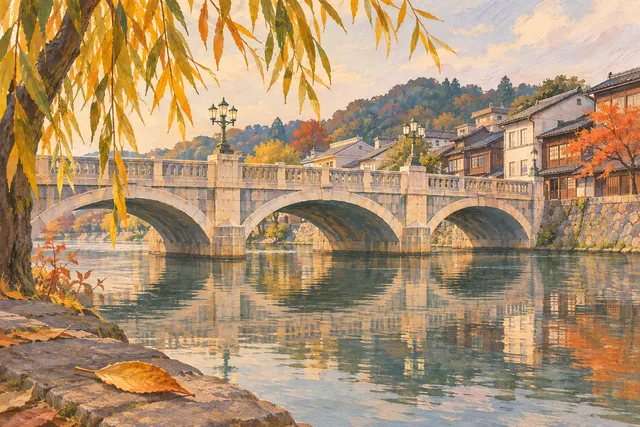
The Three Arches of Asanogawa Bridge
From the bank of the Asano River, I can finally see the three arches hidden beneath my walk across the bridge.
Walks through Japanese towns and notes gathered along the way, by train and by boat.
From the bank of the Asano River, I can finally see the three arches hidden beneath my walk across the bridge.
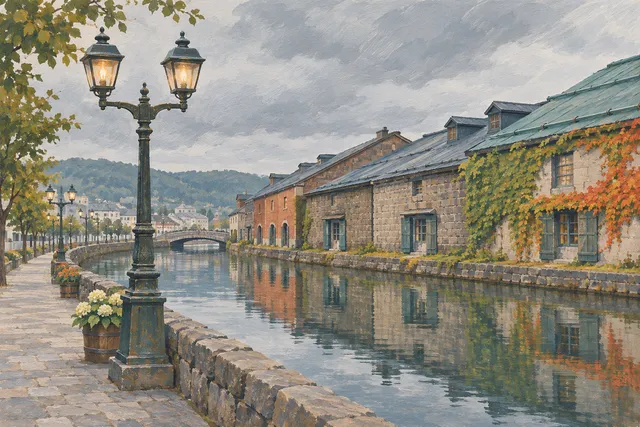
I pick out a gas lamp on the canal walk before it is lit. In daylight, Otaru shows me the colors of its stone.
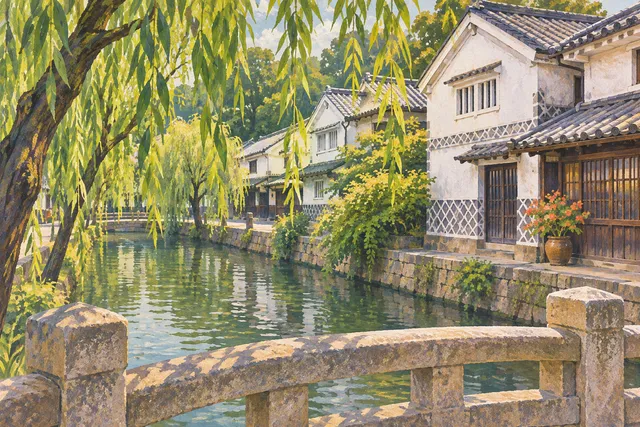
At the edge of the Kurashiki River, I wait for the willow branches to part. For a moment a white wall meets its reflection.
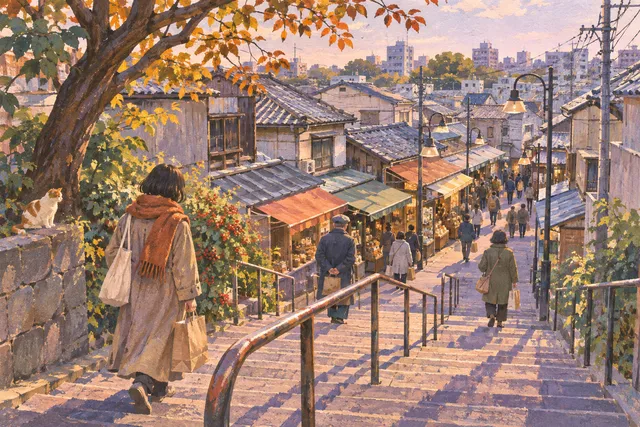
On the walk from Nippori to Yanaka Ginza, even a shopping bag looks different from the top of the steps and the bottom.
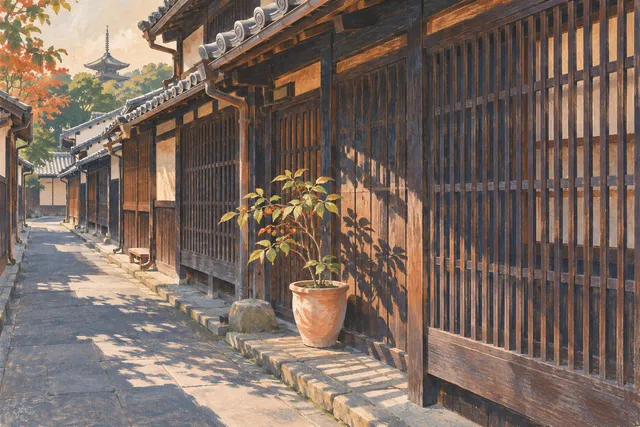
On a street in Naramachi, I compare a wooden lattice with the shadow it casts on the ground.
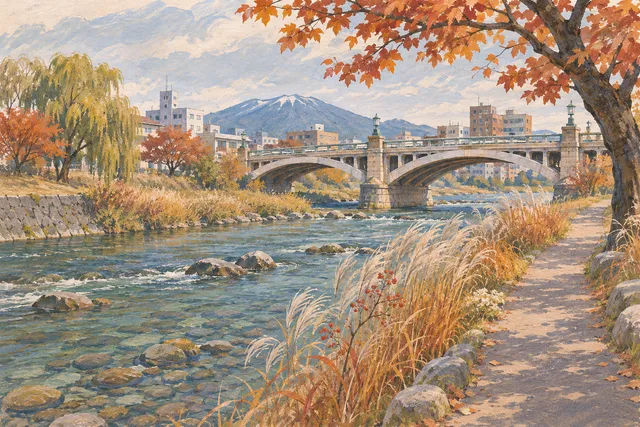
The Nakatsu River runs through central Morioka. A single stone on the riverbed makes its clear current visible.
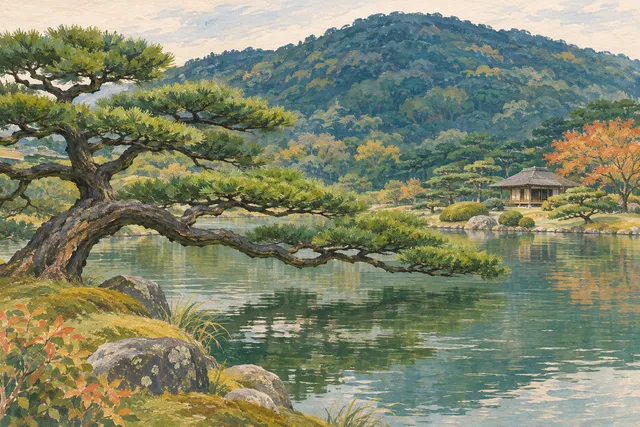
I follow the same pine branch with my eyes from opposite sides of a pond on a short walk through the garden.
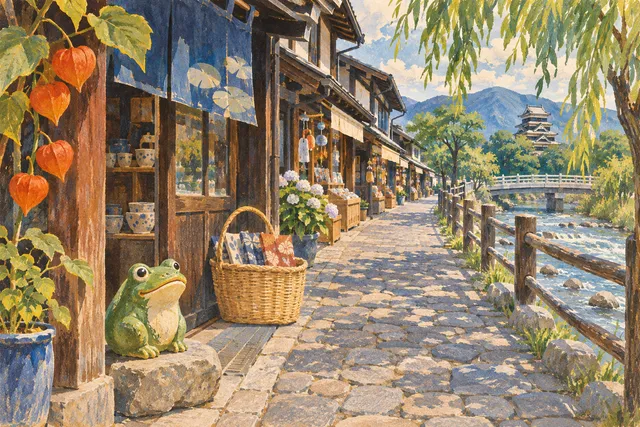
On a shopping street beside the Metoba River, a small frog outside a shop helps me find my way back.
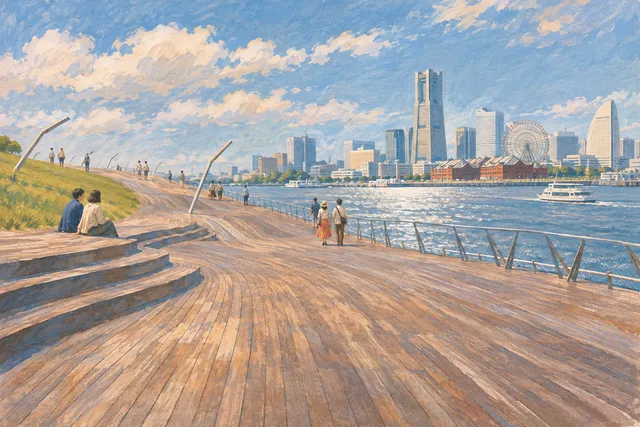
On the rooftop plaza at Yokohama’s Osanbashi Pier, I follow a board with my eyes until I find myself looking out to sea.
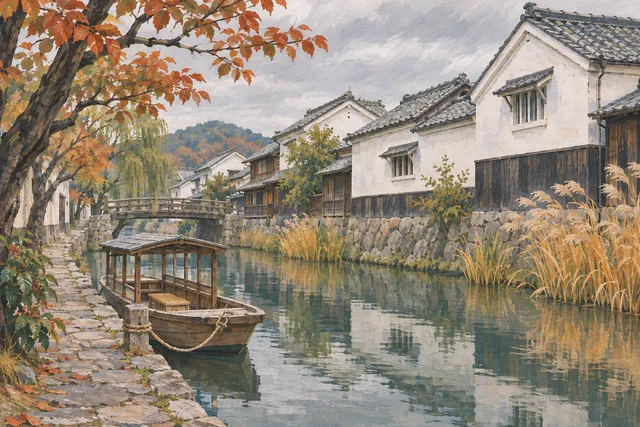
A boat rests below a white wall. I watch the narrow strip of water between the hull and the stone bank to tell time on the canal.
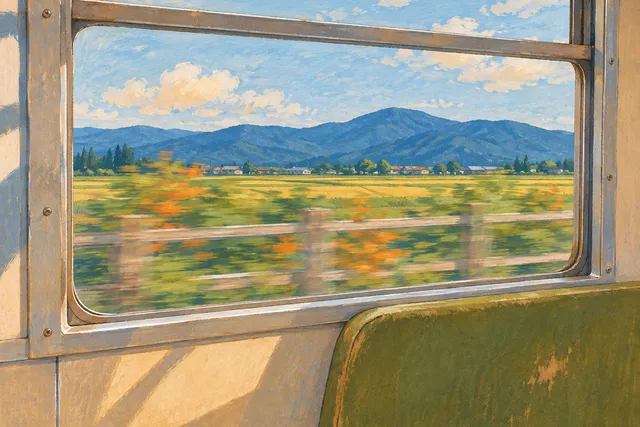
Near, middle, far. Looking through a train window at three distances keeps me surprisingly busy on a short ride.
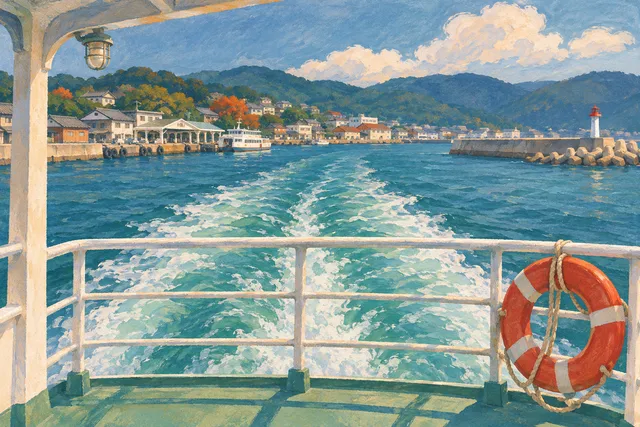
From the stern I watch the harbor grow smaller and compare it with the white line of foam behind us.
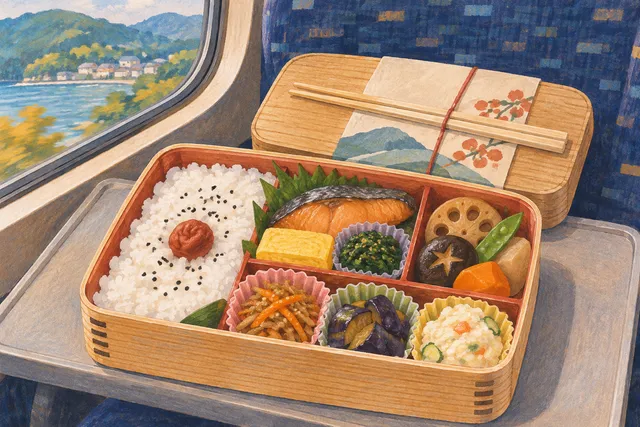
On a small train table, lunch begins with finding a spot for the lid and the paper sleeve from my chopsticks.
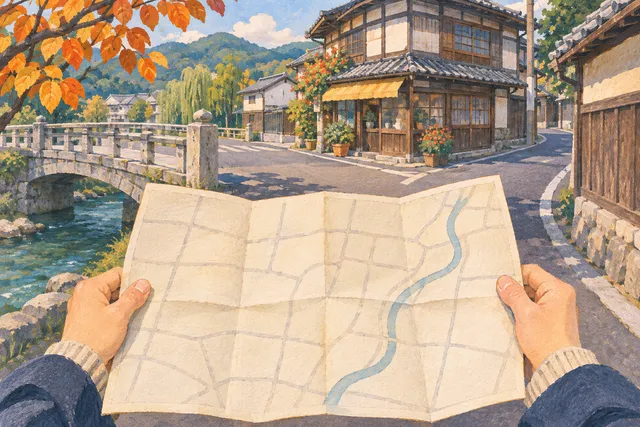
At a street corner I turn my paper map. Once the river on the page runs the same way as the river in front of me, I can find the next bridge.
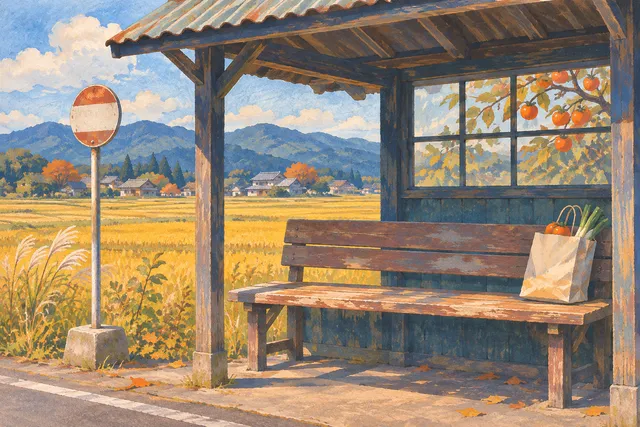
Between buses, the view from an old wooden bench becomes a whole leg of the journey.
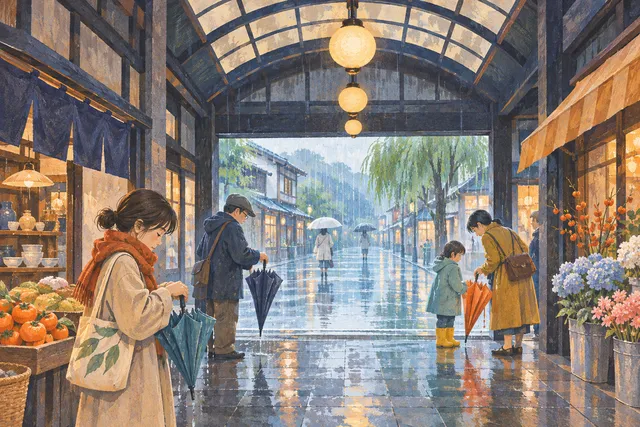
From the shelter of a shopping arcade, I watch the gaps between raindrops on the paving to decide when to set out.

A daikon at the morning market makes me think about how much of my journey is left and what I can really take home.
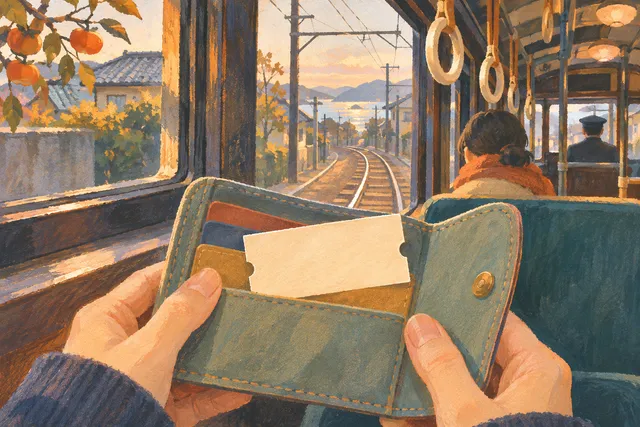
A small rectangle of paper in my wallet brings back the feel of a tram rounding a corner.
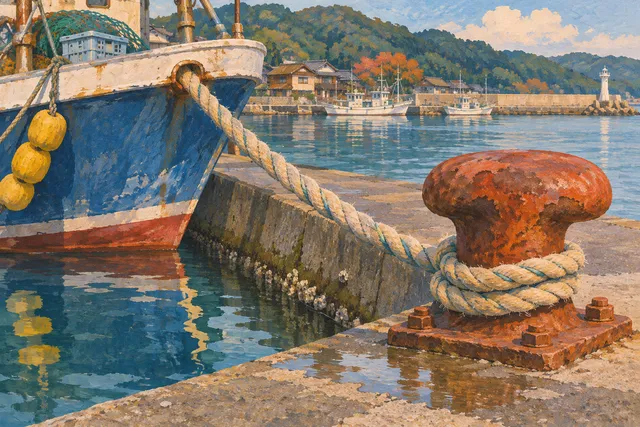
From the harbor footpath, one rope between a boat and the quay gives me a way to read the water and the wind.
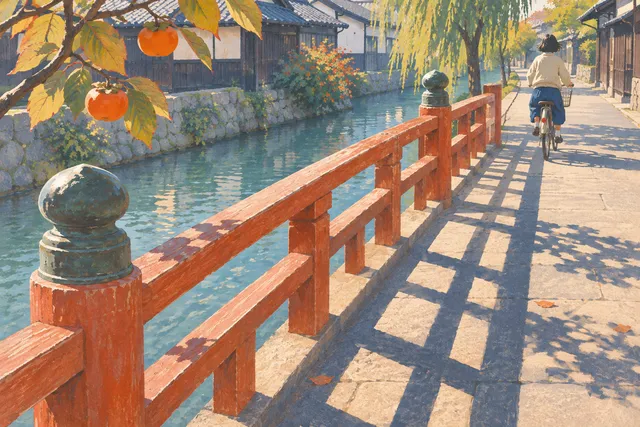
I follow the railings’ shadows across a short bridge, one section at a time, walking in step with the afternoon light.
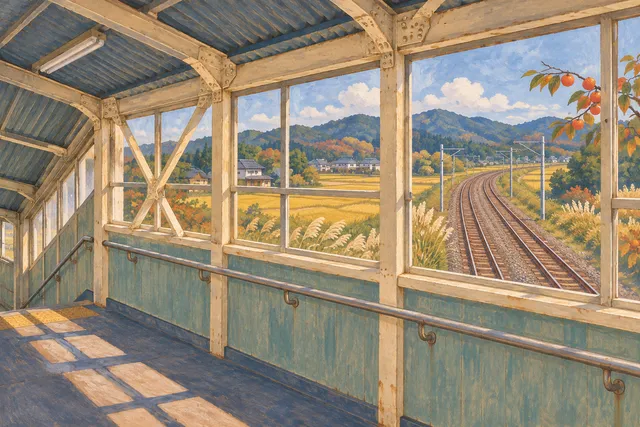
Changing platforms, I find that the tracks fit inside the landing window. A few spare minutes give me a bird’s-eye view.
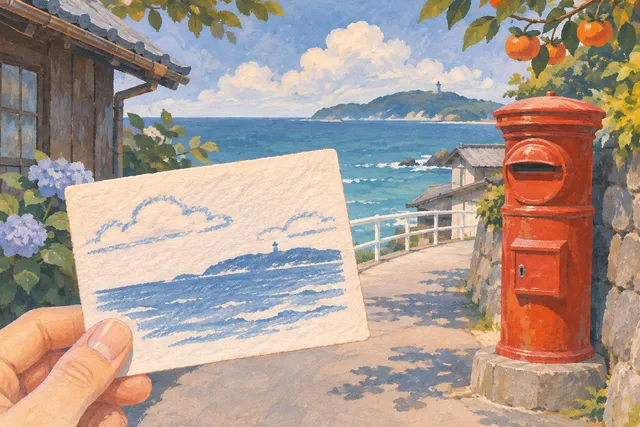
On a postcard from a seaside town, one sentence catches the wind that a blue pen cannot draw.
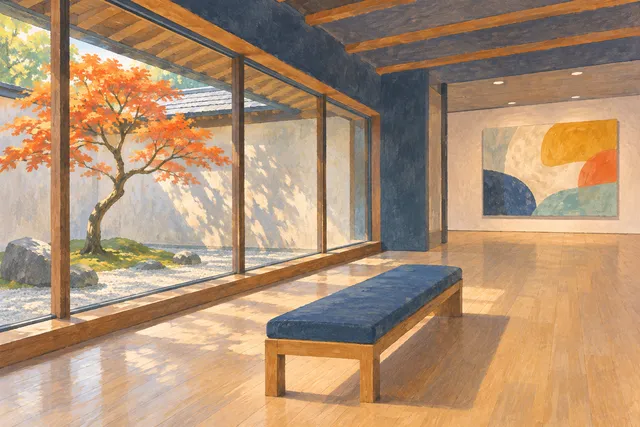
A seat between a gallery and a courtyard gives eyes accustomed to walking a chance to slow down.
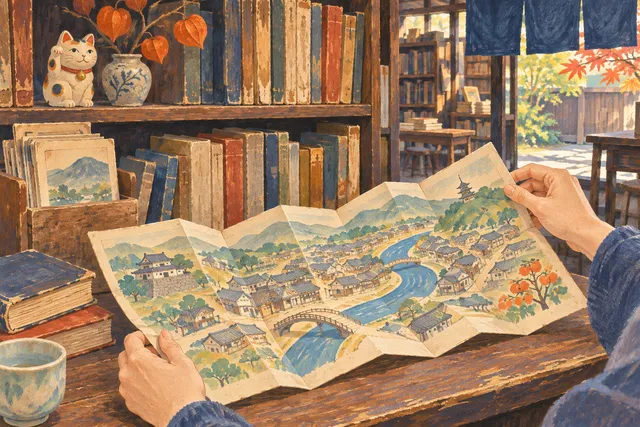
In a secondhand bookshop I unfold an old map of town and look for a bend in the river I still know.
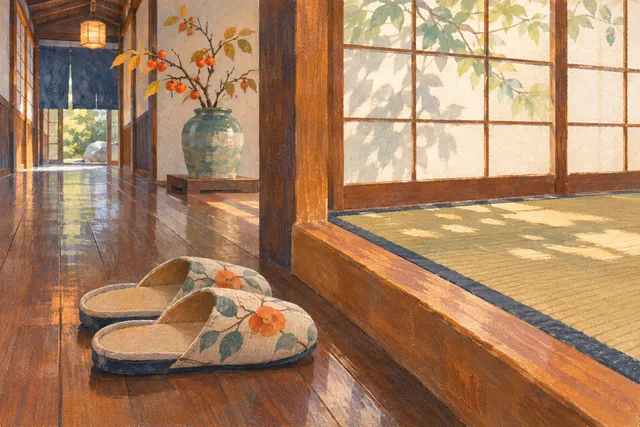
I set my slippers side by side before stepping onto the tatami. By morning the same corridor feels shorter.
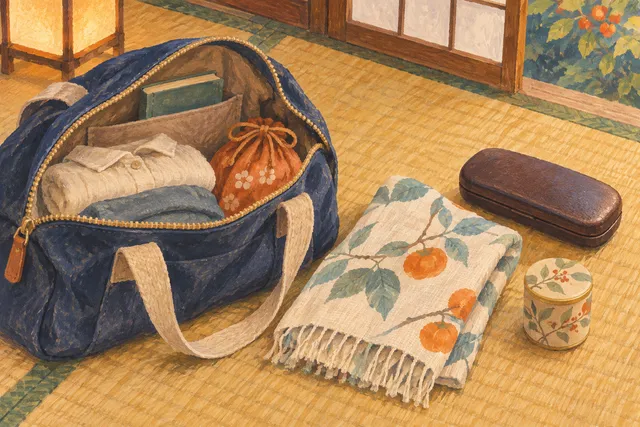
My overnight bag makes a sound at every step. At the inn, a single cloth finds a quiet place for the culprit.
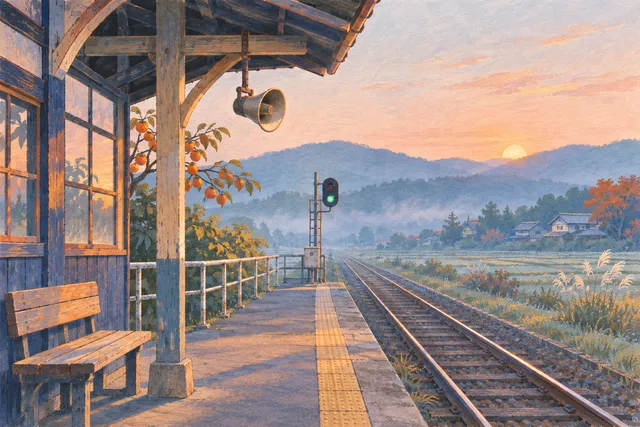
On an early platform, I put near and distant sounds into my notebook while I wait for the announcement.
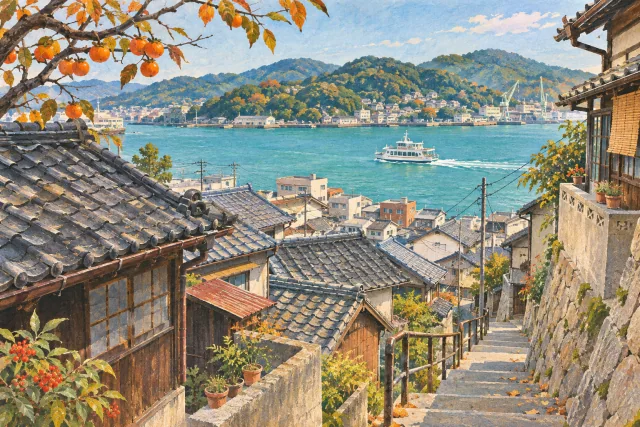
Blue water appears between tiled roofs. I take the slope slowly down to the shore and watch the ferry leave for Mukaishima.
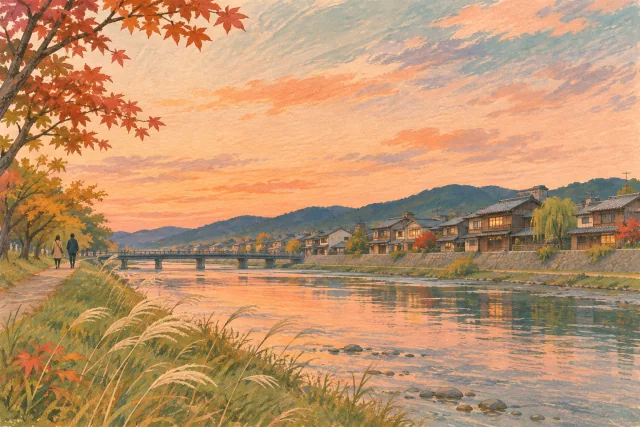
Down to the river at Demachiyanagi, where two streams meet, then south as far as the next bridge.